Air Handling Unit Cooling Coil: Function, Types, and Benefits
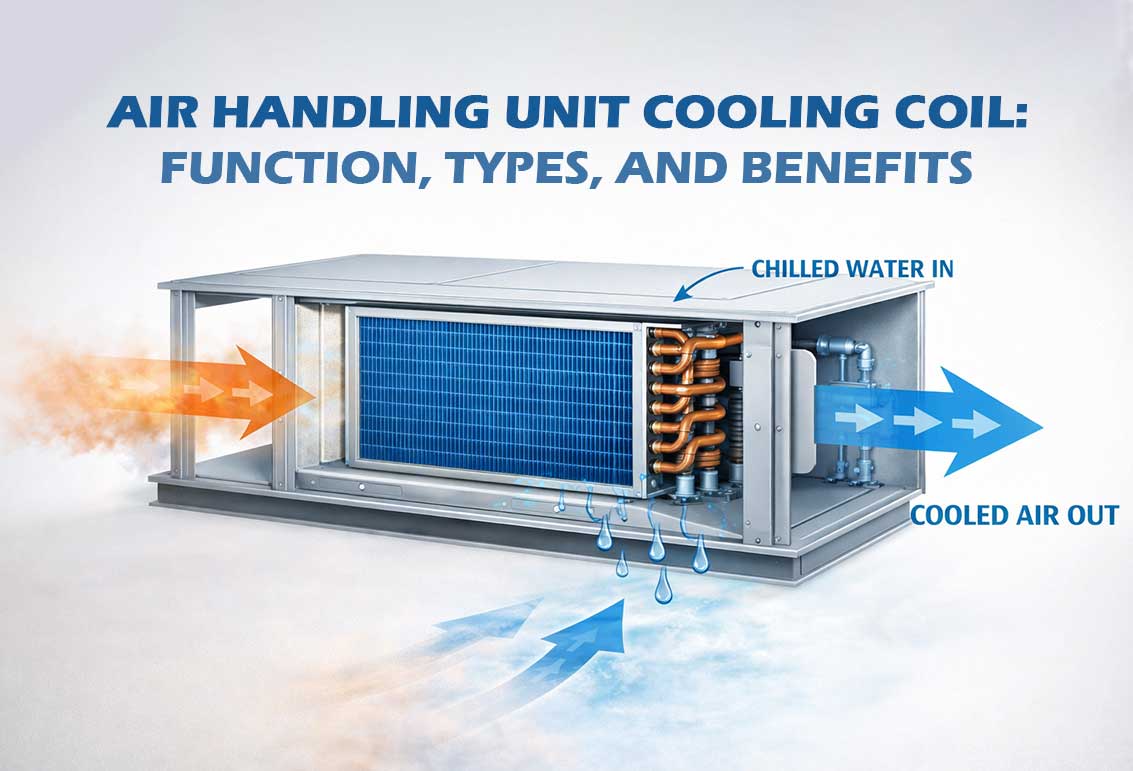
In modern HVAC systems, maintaining indoor air quality and temperature control is essential for commercial buildings, industrial facilities, hospitals, shopping malls, and office spaces. One of the most important components that enables efficient cooling and air conditioning is the AHU cooling coil. Though often hidden inside the system, this component plays a major role in regulating temperature, humidity, and overall comfort.
Understanding how cooling coils work inside an air handling unit (AHU), the types available, and the benefits they provide can help facility managers and engineers make better decisions while designing or upgrading HVAC infrastructure.
What is an AHU Cooling Coil?
An AHU cooling coil is a heat exchange component installed inside an Air Handling Unit that helps remove heat from the air. As warm air passes over the coil surface, heat is absorbed by chilled water or refrigerant flowing inside the coil tubes. This process lowers the air temperature before it is distributed throughout the building.
Cooling coils are designed to handle large volumes of air efficiently, making them suitable for industrial and commercial environments where temperature consistency is crucial. An Air Handling Unit (AHU) is a large, centralized HVAC component that conditions and circulates air within commercial and industrial buildings. It operates as the "heart" of HVAC systems, regulating indoor temperature, humidity, and air quality by pulling in outside air, filtering it, and cooling or heating it before distributing it through ductwork.
In addition to cooling, these coils also help in controlling humidity levels by condensing excess moisture from the air. This contributes to improved indoor air quality and comfort.
Function of Cooling Coil in an Air Handling Unit
The primary function of an AHU cooling coil is to transfer heat from air to the cooling medium. However, its role goes beyond just temperature reduction.
When air moves across the coil:
- Heat is extracted from the air
- Moisture condenses on the coil surface
- Conditioned air is circulated into the occupied space
This process helps maintain desired indoor conditions even in high occupancy or high heat load environments.
Cooling coils also support ventilation efficiency by ensuring that fresh air entering the system is properly conditioned before reaching indoor spaces. This improves comfort and reduces the burden on other HVAC components.
How AHU Cooling Coils Improve Indoor Air Quality
Indoor air quality is a major concern in modern buildings, especially where people spend long hours working or where sensitive manufacturing processes take place.
Cooling coils assist in air purification indirectly. By reducing humidity levels, they limit the growth of mold, bacteria, and airborne contaminants. Properly functioning coils also help maintain consistent airflow, preventing stagnant air pockets.
In facilities such as pharmaceutical plants, electronics manufacturing units, and data centers, maintaining stable environmental conditions is critical. The role of the AHU cooling coil becomes even more significant in such environments.
Types of AHU Cooling Coils
Cooling coils are available in different configurations based on design requirements, cooling medium, and application.
1. Chilled Water Cooling Coils
These coils use chilled water supplied from a central chiller plant. As air passes over the coil, heat is transferred to the chilled water circulating inside.
Chilled water coils are widely used in large commercial buildings because they provide efficient cooling across multiple zones.
2. Direct Expansion (DX) Cooling Coils
DX coils use refrigerant instead of water. The refrigerant evaporates inside the coil tubes, absorbing heat directly from the air.
These systems are commonly used in smaller or standalone HVAC setups where installing a centralized chiller may not be practical.
3. Evaporator Coils
These are similar to DX coils and are part of refrigeration-based cooling systems. They are often used in industrial applications where precise temperature control is required.
Each coil type offers specific advantages depending on building size, cooling load, and operational requirements.
Key Design Factors of AHU Cooling Coils
When selecting an AHU cooling coil, engineers must consider several performance parameters to ensure efficient operation.
Important factors include:
- Coil surface area and fin design
- Air velocity and pressure drop
- Cooling capacity requirements
- Tube material and corrosion resistance
- Drainage system for condensate removal
Optimizing these parameters ensures maximum heat transfer efficiency while minimizing energy consumption.
Benefits of Installing High-Quality AHU Cooling Coils
Modern HVAC systems depend heavily on coil performance. A well-designed cooling coil provides several long-term benefits.
Energy Efficiency
Efficient heat transfer reduces the load on chillers and compressors, helping lower overall power consumption.
Better Thermal Comfort
Consistent temperature distribution improves occupant comfort in offices, malls, and institutional buildings.
Reduced Equipment Wear
Proper cooling reduces strain on fans and compressors, increasing system lifespan.
Humidity Control
Maintaining balanced humidity levels prevents condensation-related issues such as mold growth and structural damage.
Operational Reliability
High-quality coils ensure uninterrupted cooling performance even during peak demand.
These advantages make cooling coils a critical investment in HVAC planning.
Maintenance Importance for AHU Cooling Coils
Even the best cooling coil requires regular maintenance to perform efficiently. Dust accumulation, microbial growth, and fin blockage can reduce airflow and heat transfer capacity.
Routine cleaning and inspection help maintain optimal performance. Maintenance activities usually include:
- Cleaning coil fins and tubes
- Checking condensate drainage
- Inspecting corrosion or leakage
- Monitoring airflow resistance
Preventive maintenance not only improves efficiency but also reduces unexpected downtime.
Role of AHU Cooling Coils in Industrial Applications
Industrial environments often generate significant internal heat due to machinery, production processes, and equipment operations. Cooling coils help stabilize indoor temperature, ensuring smooth workflow and product quality.
Industries that heavily depend on AHU cooling coils include:
- Textile manufacturing
- Food processing plants
- Electronics assembly units
- Pharmaceutical production facilities
- Warehousing and logistics hubs
In these settings, maintaining environmental control directly impacts productivity and compliance standards.
Technological Advancements in Cooling Coil Design
With growing emphasis on sustainability, manufacturers are focusing on developing coils that offer improved thermal performance and reduced environmental impact.
Advanced materials, enhanced fin geometry, and optimized airflow designs are helping increase cooling efficiency while lowering energy consumption.
Smart monitoring systems are also being integrated to track coil performance in real time. This allows facility managers to detect inefficiencies early and take corrective action.
Such innovations are transforming traditional HVAC systems into intelligent climate control solutions.
Choosing the Right AHU Cooling Coil for Your Facility
Selecting the right cooling coil requires evaluating multiple operational factors. Facility size, cooling load, airflow patterns, and energy goals must all be considered.
Working with experienced HVAC solution providers ensures that the chosen system meets both performance expectations and long-term reliability requirements.
Custom-designed cooling coils often deliver better efficiency because they are tailored to specific environmental conditions.
Frequently Asked Questions (FAQ)
What is the main purpose of an AHU cooling coil?
The main purpose is to remove heat and moisture from air before it is circulated inside a building, ensuring comfortable indoor conditions.
What is an AHU coil?
An AHU (Air Handling Unit) coil is a vital HVAC heat exchanger that heats, cools, or dehumidifies air as it circulates through a building. Found within commercial and industrial AHUs, these coils use circulating chilled water, hot water, steam, or refrigerant to condition the air before it is distributed via ductwork.
How often should cooling coils be cleaned?
Cleaning frequency depends on usage and environmental conditions. Industrial facilities may require quarterly maintenance, while commercial buildings may follow semi-annual schedules.
Can cooling coils improve energy efficiency?
Yes. Efficient heat exchange reduces the load on chillers and compressors, lowering electricity consumption.
What happens if an AHU cooling coil fails?
Cooling performance drops significantly, humidity may rise, and indoor comfort levels can be affected. Equipment overheating risks may also increase.
Are chilled water coils better than DX coils?
Both have advantages. Chilled water coils are suitable for large centralized systems, while DX coils work well for smaller or independent installations.
Conclusion
The AHU cooling coil is a fundamental component that ensures effective temperature control, humidity regulation, and indoor air quality across industrial and commercial environments. From improving comfort and operational efficiency to protecting equipment and infrastructure, its role is critical in modern HVAC systems.
As buildings become smarter and sustainability goals grow stronger, investing in high-performance cooling solutions is more important than ever. Reliable HVAC components designed for long-term performance and optimized airflow management are helping facilities achieve consistent climate control and energy efficiency.
Advanced air management solutions developed by Air Tree continue to support industries and commercial spaces in achieving dependable cooling performance, healthier indoor environments, and improved operational stability.
Stay ahead with more industry insights
Join our newsletter to receive the latest HVAC technologies and ventilation solutions directly in your inbox.