Double Skin Air Handling Unit: Efficiency, Hygiene, and Performance
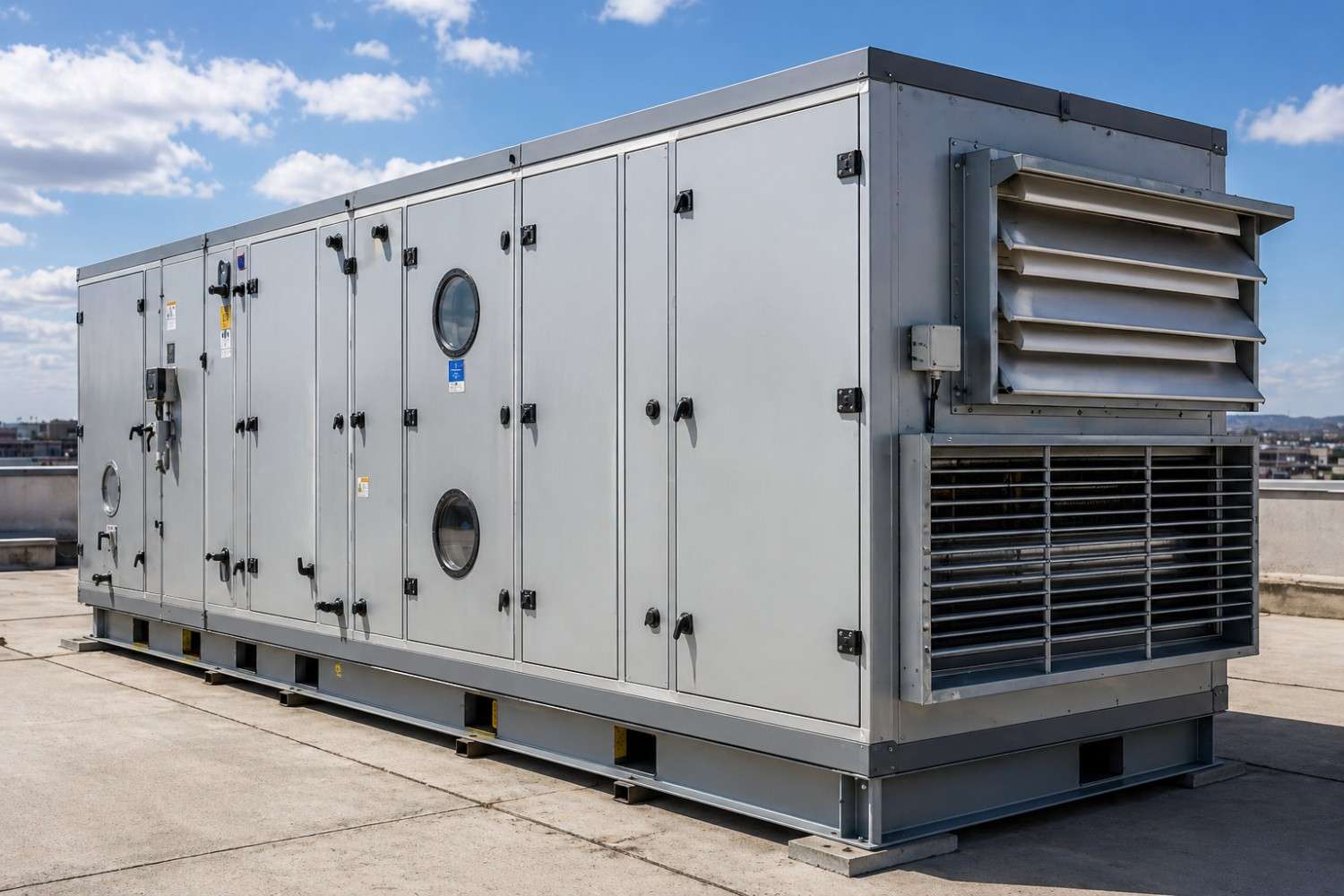
In the modern landscape of HVAC technology, the demand for superior indoor air quality (IAQ) and energy efficiency has never been higher. Whether you are managing a sterile hospital environment, a high-tech laboratory, or a massive commercial complex, the "lungs" of your building—the Air Handling Unit (AHU)—must be robust.
At Airtree, we specialize in engineering solutions that breathe life into infrastructure. One of the most critical components in our lineup is the Double Skin Air Handling Unit. But what exactly makes the "double skin" design the industry standard, and why should it be the cornerstone of your ventilation strategy?
In this comprehensive guide, we will dive deep into the mechanics, benefits, and applications of Double Skin AHUs, and why Airtree’s engineering sets the benchmark for performance.
What is a Double Skin Air Handling Unit?
At its core, a Double Skin Air Handling Unit (AHU) is an integrated piece of equipment used to condition and circulate air as part of a heating, ventilating, and air-conditioning system. Unlike traditional single-skin units, which consist of a single metal sheet shell, a double-skin unit features a "sandwich" panel construction.
This panel consists of:
- An Outer Skin: Usually made of pre-coated or galvanized steel to withstand environmental factors.
- An Inner Skin: Typically made of galvanized steel or stainless steel (for hygienic applications).
- Insulation Core: A layer of injected Polyurethane Foam (PUF) or Rockwool sandwiched between the two skins.
This dual-layer approach isn't just about durability; it’s about creating a thermal and acoustic barrier that single-skin units simply cannot match.
The Airtree Advantage: Why Double Skin Matters
When we design systems at Airtree,, we focus on four pillars: Thermal Efficiency, Acoustic Control, Hygiene, and Structural Integrity. Here is how the Double Skin AHU excels in each.
1. Superior Thermal Insulation
In a single-skin AHU, heat exchange between the conditioned air inside and the ambient air outside is rapid. This leads to "sweating" (condensation) on the outer cabinet, which causes rust and mold.
Airtree’s Double Skin Air Handling Units utilize high-density PUF insulation. This minimizes thermal bridging, ensuring that the cold air stays cold and the warm air stays warm until it reaches its destination. This significantly reduces the load on your chillers and heaters, leading to lower utility bills.
2. Acoustic Dampening
Air handling units are inherently noisy. The turbulence of high-capacity fans and the vibration of motors can resonate through a building. The "sandwich" panel design acts as a natural sound attenuator. The insulation layer absorbs high-frequency vibrations, making these units ideal for noise-sensitive environments like libraries, recording studios, and luxury hotels.
3. Unmatched Hygiene and IAQ
Indoor Air Quality is non-negotiable. In single-skin units, the internal insulation is often exposed to the airstream. Over time, these fibers can fray and enter the building's lungs, or worse, become a breeding ground for bacteria.
With a Double Skin Air Handling Unit, the insulation is completely encapsulated. The smooth internal metal surface is easy to wipe down and disinfect. For pharmaceutical and food-grade applications, Airtree offers stainless steel inner skins that resist corrosion from heavy cleaning agents.
4. Structural Rigidity and Leakage Prevention
Large-scale HVAC systems operate under significant pressure. Single-skin cabinets can "oil-can" or flex, leading to air leakage at the joints. Airtree’s units are built with extruded aluminum profiles and reinforced panels, ensuring the cabinet remains airtight. Less leakage means more CFM (Cubic Feet per Minute) delivered exactly where you need it.
Key Components of an Airtree Double Skin AHU
To understand the power of a Double Skin Air Handling Unit, one must look at what’s inside the box. At Airtree, we source only world-class components to populate our high-performance casings.
- The Fan Section: We utilize DIDW (Double Inlet Double Width) centrifugal fans or modern EC (Electronically Commutated) plug fans for maximum airflow with minimum power consumption.
- Cooling and Heating Coils: Our coils are crafted from high-grade copper tubes with aluminum fins, designed for optimal heat transfer.
- Filtration Suite: From basic pre-filters to HEPA filters, our units can be customized to remove 99.97% of airborne contaminants.
- Mixing Box: This allows for the precise blending of return air and fresh outdoor air, controlled by automated dampers to maintain CO2 levels.
- Humidifiers/Dehumidifiers: Essential for maintaining the precise 40-60% humidity range required for human comfort and equipment longevity.
Applications: Where Does the Double Skin AHU Shine?
While these units are versatile, they are "must-haves" in specific sectors where precision is key:
Healthcare and Hospitals
Operating theaters and ICU wards require ultra-clean air. The hygienic interior of a Double Skin AHU prevents the accumulation of pathogens, while the high-pressure casing allows for the use of HEPA filtration without air bypass.
Data Centers
Servers generate immense heat and are sensitive to dust. Airtree’s AHUs provide the high-capacity cooling required to keep processors humming while ensuring the environment remains particulate-free.
Commercial Offices and Malls
In large public spaces, energy costs are the biggest overhead. The thermal efficiency of the Double Skin Air Handling Unit ensures that the HVAC system isn't working harder than it needs to, protecting the bottom line.
Pharmaceutical Manufacturing
Cross-contamination can ruin a batch of medicine. Our units provide the precise pressure gradients and filtration needed to maintain "Clean Room" standards.
Maintenance: Keeping Your Airtree AHU at Peak Performance
One of the reasons engineers prefer Airtree is the ease of maintenance. Because the internal surfaces are smooth and the panels are modular, technicians can easily access motor sections, filter banks, and coils.
Pro-Tip: Always check the gaskets on the access doors. A Double Skin AHU is only as good as its seal. At Airtree, we use high-quality EPDM gaskets to ensure that even after years of opening and closing for filter changes, the unit remains airtight.
Why Choose Airtree?
At Airtree, we don't just sell equipment; we provide climate solutions. Our Double Skin Air Handling Units are the result of years of R&D and feedback from field engineers.
We understand that every building has a unique footprint. That is why our AHUs are modular. Need a vertical stack to save floor space? Or a weather-proof roof-top version with a rain hood? We customize every aspect—from the panel thickness (25mm, 43mm, or 50mm) to the fan static pressure—to meet your specific project requirements.
Frequently Asked Questions (FAQ)
1. What is the difference between Single Skin and Double Skin AHUs?
A single-skin AHU has a single metal wall, often with insulation glued to the inside. A Double Skin Air Handling Unit sandwiches the insulation between two metal sheets. This makes the double-skin version more hygienic, quieter, more durable, and significantly more energy-efficient.
2. How does a Double Skin AHU improve energy efficiency?
The PUF insulation between the skins acts as a thermal break. It prevents the loss of conditioned air temperature to the outside environment and eliminates thermal bridging. This reduces the work the compressor has to do, lowering energy consumption.
3. Can Airtree customize AHUs for coastal regions?
Yes. For coastal or highly corrosive environments, we recommend an outer skin of pre-painted galvanized steel and an inner skin of SS 304 or SS 316. This prevents salt-air corrosion and extends the life of the unit.
4. What thickness of insulation is standard?
Standard panels are typically 25mm thick for smaller units and 43mm to 50mm for larger, high-performance units. Airtree offers various thicknesses depending on the temperature differential and noise requirements of your project.
5. How long does a Double Skin AHU last?
With proper maintenance—such as regular filter changes and coil cleaning—an Airtree Double Skin AHU can easily last 15 to 20 years. The rigid frame and protected insulation prevent the structural degradation common in cheaper models.
Final Thoughts
The air we breathe indoors directly impacts our health, productivity, and comfort. Investing in a Double Skin Air Handling Unit from Airtree is an investment in the longevity of your building and the well-being of its occupants.
By choosing Airtree, you are opting for a partner dedicated to engineering excellence. Visit our website Airtree to explore our full range of HVAC solutions or to speak with a technical expert about your next project.
Stay ahead with more industry insights
Join our newsletter to receive the latest HVAC technologies and ventilation solutions directly in your inbox.