How to Clean an AHU Cooling Coil Without Damaging Fins
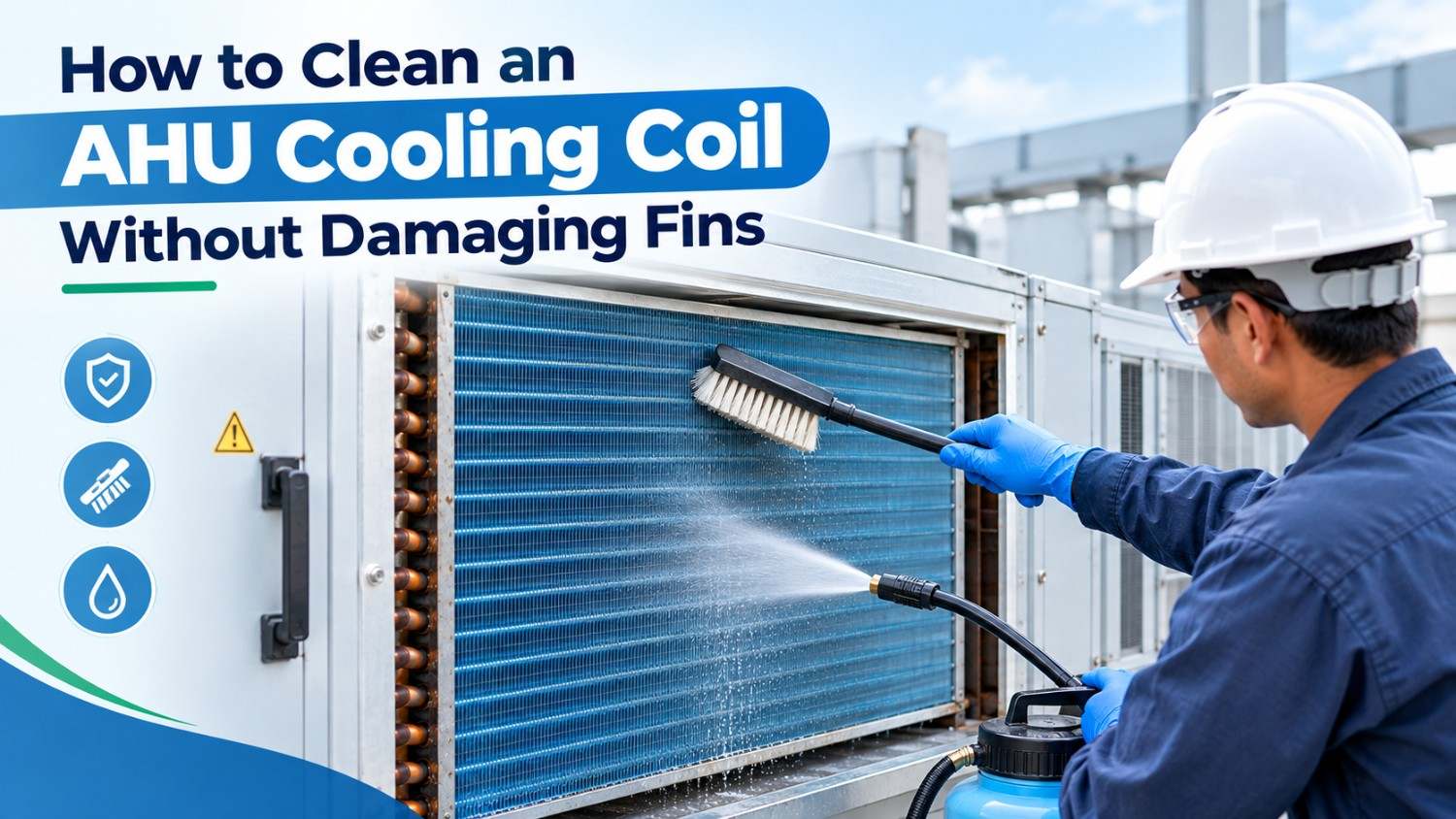
Quick answer: To clean an AHU Cooling coil without damaging the fins, switch off and lock out the unit, vacuum loose dust with a soft brush, apply a coil-safe, pH-neutral cleaner, let it soak, then rinse with low-pressure water sprayed parallel to the fins, from the leaving-air side toward the entering-air side. Finish by combing any bent fins straight and checking the drain pan.
A dirty cooling coil is one of the most common reasons an Air handling unit (AHU) loses capacity and burns extra energy. But the fins on a coil are thin aluminium sheets, and a careless wash can crush them and make airflow worse than before. This guide explains how to clean an AHU cooling coil the right way, so you restore performance without causing damage.
Why Cooling Coil Cleaning Matters
Dust, lint, pollen and biofilm build up on the coil surface and act like insulation. The result:
- Reduced heat transfer and weaker cooling
- Higher pressure drop across the coil, so the fan works harder
- Higher energy bills and longer compressor or chiller run times
- Moisture and microbial growth, which hurt indoor air quality
- Faster corrosion and a shorter coil life
Regular, gentle cleaning keeps the coil efficient and extends the life of the whole AHU.
How Often Should You Clean an AHU Cooling Coil?
As a general guide, inspect coils every three months and clean them at least once or twice a year. Increase the frequency in dusty cities, near construction, in kitchens, hospitals, cleanrooms and facilities with poor pre-filtration. A rise in coil pressure drop or a drop in supply-air temperature performance is a clear sign it is time to clean.
Tools and Materials You Will Need
- Soft-bristle brush or coil brush
- Vacuum cleaner with a brush attachment (HEPA recommended)
- Fin comb matched to your coil's fins per inch (FPI)
- pH-neutral, non-acidic, coil-safe cleaner approved for aluminium fins
- Low-pressure sprayer or garden-type sprayer
- Water source with a pressure regulator
- Drain pan cleaner or mild sanitiser
- PPE: gloves, safety glasses, mask and protective clothing
Step-by-Step: How to Clean an AHU Cooling Coil Safely
Step 1: Isolate and secure the AHU
Switch off the AHU, apply lockout/tagout, and let the unit settle. Open the access panels and cover motors, electrical parts, sensors and insulation with plastic sheets so they stay dry.
Step 2: Inspect the coil
Check for dust loading, bent fins, corrosion, oil film or biological growth. Note the condition so you can compare the coil before and after cleaning.
Step 3: Remove loose debris first
Use a vacuum with a soft brush attachment or a soft brush, moving in the direction of the fins (usually vertical). Dry-cleaning first stops dust turning into mud once water is applied. Never use a wire brush, which scratches and bends fins.
Step 4: Apply a coil-safe cleaner
Choose a pH-neutral, non-acidic cleaner made for aluminium-fin coils. Strong acids and alkalis can eat into fins and tubes and shorten coil life. Spray evenly on the coil, covering the full face, and let it soak for the time the manufacturer specifies (commonly 5 to 15 minutes) so it can lift grime on its own.
Step 5: Rinse with low-pressure water
This step causes most fin damage, so take care:
- Keep water pressure low. Many manufacturers advise staying well under 100 psi, so always check your coil's guidance.
- Spray parallel to the fins, never at an angle.
- Hold the nozzle a safe distance away and use a wide fan pattern.
- Rinse from the leaving-air side toward the entering-air side so dirt is pushed out the way it came in, instead of deeper into the coil.
Repeat until the runoff is clear.
Step 6: Straighten any bent fins
Slide a fin comb that matches the coil's FPI gently along the bent area and work it straight. Do not force it. Heavily crushed sections may need professional repair.
Step 7: Clean the drain pan and drain line
Remove sludge, flush the condensate line and apply a mild sanitiser. A clogged drain can lead to overflow, odours and microbial growth.
Step 8: Dry, close up and test
Let the coil drain, remove covers, close the panels, restore power and run the AHU. Compare supply-air temperature, airflow and pressure drop with your earlier readings.
Common Mistakes That Damage Coil Fins
- Using a pressure washer at high pressure or too close to the coil
- Spraying across the fins instead of parallel to them
- Using acidic or caustic cleaners not meant for aluminium
- Brushing with wire or stiff bristles
- Skipping dry-cleaning and pushing dirt deeper with water
- Forgetting to protect motors, sensors and electricals
- Leaving cleaner residue on the coil
When to Call a Professional
Call a qualified HVAC service team if the coil is heavily fouled or oily, the fins are badly crushed, the coil is corroded or leaking, or the unit serves a hospital, cleanroom or other critical space. Professional cleaning methods and proper coil replacement protect both performance and warranty.
Keep Your Coil Cleaner for Longer
Good filtration is the best way to cut the need for deep cleaning. Use correctly rated pre-filters and fine filters, replace them on schedule, seal air bypass paths and keep a simple maintenance log. Looking for reliable HVAC equipment and AHU solutions built for easy maintenance? Explore the Airtree HVAC product range or visit Airtree HVAC to speak with our team.
Frequently Asked Questions (FAQ)
1. Can I use a pressure washer to clean an AHU cooling coil?
Only with great care. High pressure easily bends and flattens aluminium fins. Use low pressure, a wide fan nozzle and spray parallel to the fins. When in doubt, use a low-pressure sprayer instead.
2. What is the best cleaner for an AHU cooling coil?
A pH-neutral, non-acidic cleaner made for aluminium-fin coils is the safest choice. Always follow the product's dilution and soak-time instructions, and rinse thoroughly.
3. How do I fix bent coil fins?
Use a fin comb that matches the coil's fins per inch and run it gently along the bent fins. Avoid forcing it, and use a professional for heavy damage.
4. How often should AHU cooling coils be cleaned?
Inspect quarterly and clean at least once or twice a year, or more often in dusty, humid or high-use environments.
5. Should I clean the coil from the front or the back?
Rinse from the leaving-air side (downstream) toward the entering-air side (upstream), so dirt is pushed out the way it came in.
6. Can I clean the coil while the AHU is running?
No. Always switch off and lock out the AHU first for safety and to avoid spreading dirt and water into the system.
7. How do I know my cooling coil is dirty?
Warning signs include weaker cooling, higher energy use, rising pressure drop across the coil, visible dust or slime, musty odours and frequent drain-pan problems.
8. Does a clean coil save energy?
Yes. A clean coil transfers heat better and reduces fan load, which helps lower power consumption and keeps cooling stable.
Stay ahead with more industry insights
Join our newsletter to receive the latest HVAC technologies and ventilation solutions directly in your inbox.