How to Select the Right Tube Axial Fan for Your Application
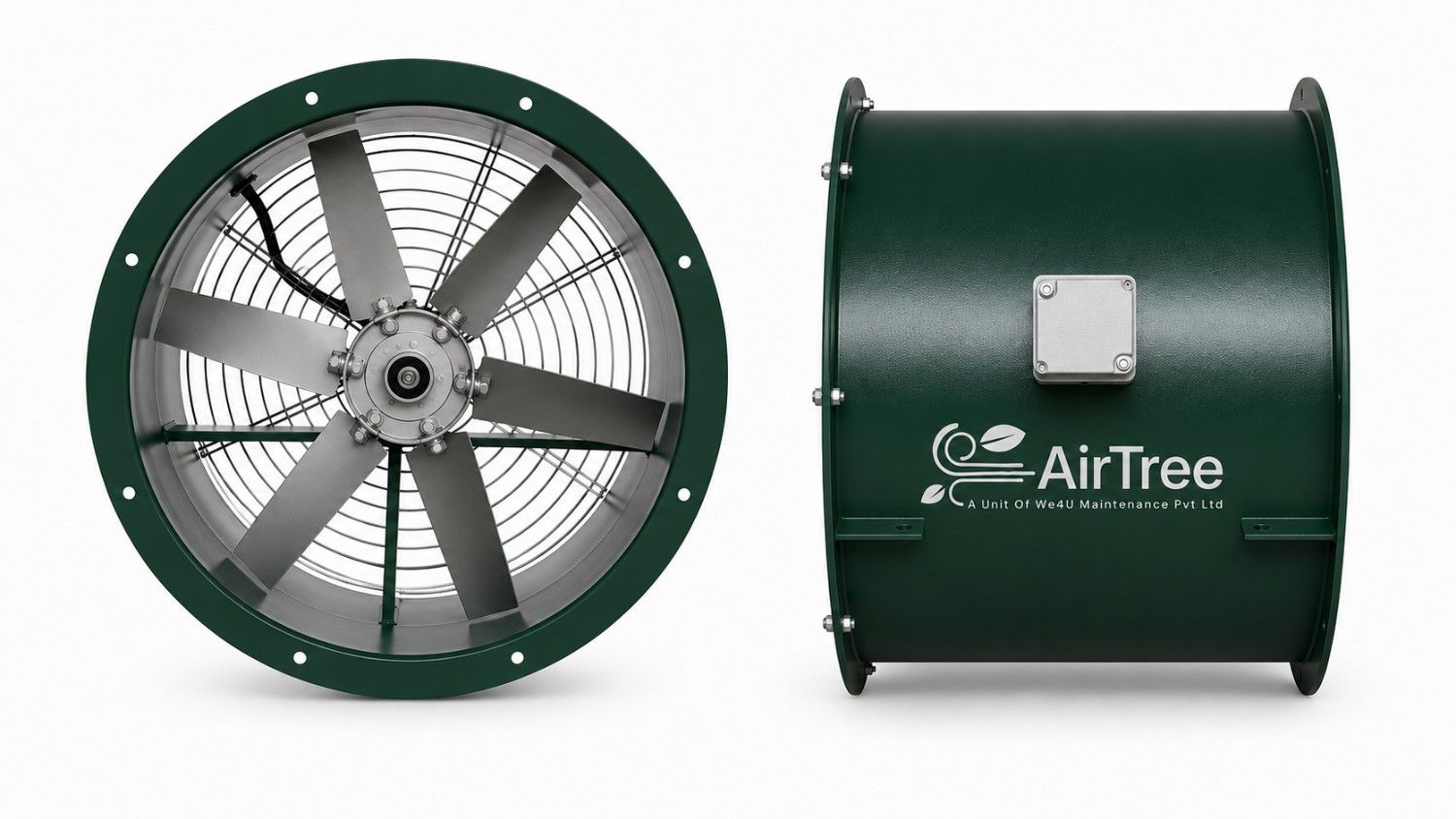
In industrial and commercial ventilation systems, selecting the right fan is critical for maintaining airflow, temperature control, air quality, and energy efficiency. Among the many ventilation options available today, tube axial fans are one of the most widely used solutions because of their high airflow capacity, compact design, and reliable performance.
Whether you need ventilation for factories, warehouses, parking basements, workshops, commercial buildings, or HVAC systems, choosing the correct tube axial fan can directly impact system efficiency and operational costs. Companies like Airtree provide advanced ventilation solutions designed for industrial applications, helping businesses achieve effective air circulation and long-lasting performance.
You can explore Airtree’s industrial tube axial fan range here: Tube Axial Fans by Airtree
What Is a Tube Axial Fan?
A tube axial fan is a type of industrial fan designed to move air parallel to the fan shaft. These fans are commonly installed inside ducts or cylindrical housings and are known for delivering large volumes of airflow at relatively low pressure.
Tube axial fans are widely used in:
- Industrial ventilation
- Factory exhaust systems
- Basement ventilation
- Cooling applications
- HVAC air circulation
- Warehouses and storage facilities
- Parking areas
- Commercial ventilation systems
Their compact structure and efficient airflow make them ideal for applications where high air movement is required.
Why Selecting the Right Fan Matters
Many businesses choose ventilation equipment based only on fan size or price. However, improper fan selection can lead to:
- Poor airflow performance
- High electricity consumption
- Excessive noise
- Frequent maintenance
- Uneven ventilation
- Reduced equipment life
Selecting the right tube axial fan ensures:
- Better indoor air quality
- Energy-efficient operation
- Improved worker comfort
- Reliable ventilation performance
- Lower maintenance costs
- Long-term operational savings
This is why industrial HVAC manufacturers like Airtree HVAC Solutions focus on application-based fan selection rather than one-size-fits-all solutions.
Key Factors to Consider When Selecting a Tube Axial Fan
1. Understand the Application Requirement
The first step is identifying where the fan will be used. Different environments require different airflow capacities and fan configurations.
For example:
- Factories may require heavy-duty exhaust ventilation
- Basements need continuous fresh air circulation
- Warehouses require heat removal and air exchange
- Commercial kitchens need smoke and odor extraction
- HVAC systems require balanced airflow management
Clearly understanding the application helps determine the correct fan specifications.
2. Calculate Required Airflow (CFM)
Airflow is one of the most important factors in fan selection. It is typically measured in CFM (Cubic Feet per Minute).
The required airflow depends on:
- Room size
- Heat load
- Air changes per hour
- Occupancy level
- Equipment heat generation
A fan with insufficient airflow will not ventilate the space properly, while an oversized fan can waste energy and create unnecessary noise.
According to Airtree Tube Axial Fans-, their systems are available in capacities ranging from 700 to 40,000 CFM, suitable for multiple industrial applications. (Airtree HVAC)
3. Check Static Pressure Requirements
Tube axial fans are designed for high airflow and low to medium pressure applications. Static pressure refers to the resistance the fan must overcome while moving air through ducts, filters, bends, and ventilation systems.
Applications with:
- Long duct runs
- Multiple bends
- Filters
- Dampers
will require fans capable of handling higher static pressure.
Selecting a fan without considering static pressure can reduce airflow efficiency significantly.
4. Consider Fan Size and Installation Space
The available installation area plays a major role in fan selection.
Tube axial fans are preferred because of their compact cylindrical design, making them suitable for:
- Duct-mounted systems
- Ceiling installations
- Wall-mounted ventilation
- Industrial exhaust lines
Before selection, ensure proper measurements for:
- Fan diameter
- Duct compatibility
- Mounting space
- Maintenance accessibility
5. Evaluate Energy Efficiency
Energy efficiency is essential for reducing operational costs, especially in facilities where fans run continuously.
An energy-efficient tube axial fan can:
- Lower electricity bills
- Reduce motor load
- Improve airflow efficiency
- Increase system lifespan
Modern industrial fans are designed with aerodynamic blades and optimized motors to reduce power consumption while maintaining airflow performance.
6. Noise Levels and Working Environment
Industrial ventilation systems can generate considerable noise if the wrong fan is selected.
For workplaces where employee comfort matters, low-noise operation becomes important. Noise levels are influenced by:
- Blade design
- Motor quality
- Fan speed
- Installation method
Properly designed tube axial fans offer smoother airflow and lower vibration levels.
7. Material and Build Quality
The operating environment determines the ideal fan construction material.
For example:
- Corrosive environments require anti-corrosion coatings
- High-temperature areas need heat-resistant materials
- Dusty industrial environments require robust metal construction
High-quality industrial fans are typically built using durable steel or aluminum components for long-term performance.
Airtree HVAC Products focuses on industrial-grade ventilation systems designed for durability and continuous operation.
8. Motor Type and Speed Control
Motor performance directly affects fan efficiency and lifespan.
Important factors include:
- Motor efficiency
- RPM (Rotations Per Minute)
- Variable speed control
- Energy consumption
Variable speed fans are beneficial because they allow airflow adjustment based on operational needs, reducing unnecessary power usage.
9. Maintenance Requirements
Industrial facilities prefer ventilation systems that are easy to maintain.
Before selecting a tube axial fan, consider:
- Ease of cleaning
- Motor accessibility
- Spare part availability
- Service support
A low-maintenance fan reduces downtime and long-term maintenance expenses.
10. Safety and Compliance Standards
Industrial ventilation systems should comply with safety and performance standards.
Depending on the application, you may need:
- Fire-rated fans
- Explosion-proof motors
- Corrosion-resistant systems
- High-temperature resistance
For industrial applications involving smoke extraction or hazardous gases, choosing certified systems becomes extremely important.
Common Applications of Tube Axial Fans
Tube axial fans are highly versatile and widely used across industries. Common applications include:
Industrial Factories
Used for heat removal, machine cooling, and fresh air circulation.
Parking Basements
Helps remove smoke, fumes, and stale air from enclosed parking spaces.
Warehouses
Maintains airflow and temperature balance in large storage facilities.
Commercial Buildings
Supports HVAC ventilation and indoor air circulation.
Manufacturing Plants
Used for process ventilation and exhaust systems.
Cooling Applications
Ideal for equipment cooling and industrial heat dissipation.
Why Choose Airtree Tube Axial Fans?
Airtree HVAC offers industrial ventilation systems designed for efficient airflow, durability, and reliable performance.
Their tube axial fans are suitable for:
- Factories
- Basements
- Warehouses
- Commercial HVAC systems
- Industrial exhaust applications
Key advantages include:
- High airflow performance
- Durable construction
- Energy-efficient operation
- Low maintenance
- Industrial-grade quality
- Wide airflow capacity range
Airtree’s ventilation systems are designed to meet the growing demands of modern industrial and commercial facilities.
Final Thoughts
Selecting the right tube axial fan is not just about choosing a fan with the highest airflow. It requires proper evaluation of airflow requirements, static pressure, installation space, energy efficiency, noise levels, and application type.
A properly selected fan improves ventilation performance, enhances indoor air quality, reduces energy costs, and ensures reliable long-term operation.
Industrial HVAC manufacturers like Airtree HVAC Solutions provide high-performance tube axial fans engineered for demanding industrial environments. Whether you need ventilation for a factory, basement, warehouse, or commercial building, choosing the right system can significantly improve operational efficiency.
FAQs
1. What is a tube axial fan used for?
Tube axial fans are used for industrial ventilation, exhaust systems, cooling, basement ventilation, and HVAC air circulation.
2. How do I choose the correct airflow for a tube axial fan?
Airflow depends on room size, ventilation requirements, heat load, and air changes needed in the space.
3. Are tube axial fans energy efficient?
Yes, modern tube axial fans are designed for high airflow with lower power consumption.
4. Can tube axial fans be used in factories?
Yes, they are widely used in factories for heat removal, fresh air supply, and exhaust ventilation.
5. What is the difference between axial fans and centrifugal fans?
Axial fans provide high airflow at low pressure, while centrifugal fans are better for high-pressure applications.
6. Are Airtree tube axial fans suitable for industrial use?
Yes, Airtree offers industrial-grade tube axial fans designed for factories, warehouses, basements, and HVAC systems. (Airtree HVAC)
Stay ahead with more industry insights
Join our newsletter to receive the latest HVAC technologies and ventilation solutions directly in your inbox.