Wet Scrubber Manufacturer in Greater Noida
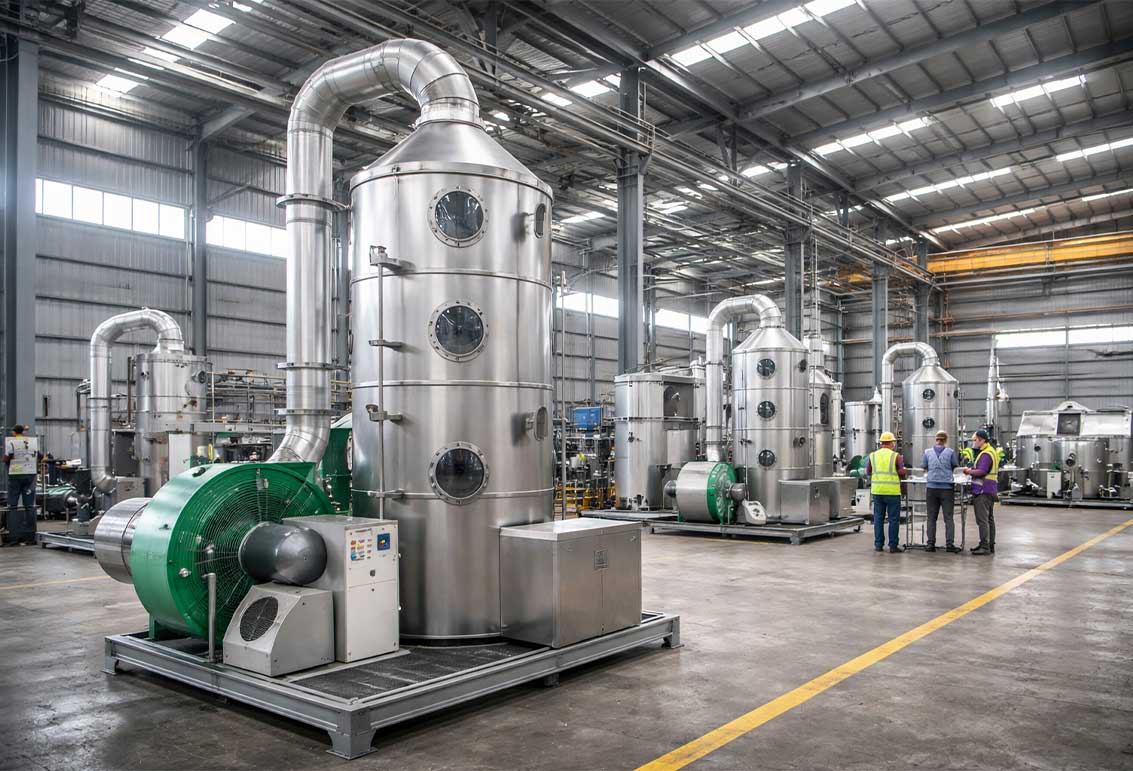
What Is a Wet Scrubber?
A wet scrubber is an air pollution control device designed to remove particulate matter, gases, fumes, and hazardous components from industrial exhaust streams. It works by using a liquid (usually water or a chemical solution) to “wash” pollutants out of a gas stream. When contaminated air passes through the scrubbing liquid, particles and pollutants get captured or dissolved, resulting in cleaner emissions.
In simple terms:
Wet scrubbers clean dirty air by trapping pollutants in a liquid solution.
These systems are widely used wherever harmful gases, corrosive fumes, or dust emissions are generated—such as in chemical processing, ink manufacturing, metal processing, and paint booths.
Why Do Industries Use Wet Scrubbers?
Industrial plants generate a variety of emissions that can be hazardous to the environment and human health. Some reasons wet scrubbers are preferred include:
- Ability to handle both particulate and gaseous pollutants
- High efficiency in removing toxic fumes
- Can be customized for specific industrial gases
- Works even in high‑temperature applications
- Reduces environmental compliance risk
When pollution control is required by law, wet scrubbers offer a proven, flexible, and efficient solution.
How Does a Wet Scrubber Work?
Understanding the internal process helps businesses choose the right design and manufacturer.
Step‑by‑Step: Wet Scrubber Operation
Polluted Air Enters the Scrubber
– Exhaust gases from industrial processes are directed into the scrubber unit.
Contact with Scrubbing Liquid
– Polluted air comes into direct contact with a liquid spray or scrubbing solution.
Mass Transfer and Absorption
– Particulate matter and soluble gases get absorbed into the liquid.
Droplet Separation
– The wet scrubber’s internal design separates collected pollutants within the liquid.
Clean Air Discharges
– Cleaned air exits the scrubber system, meeting emission standards.
Effluent Treatment
– The wastewater containing pollutants is treated separately before disposal.
This controlled wash action ensures efficient removal of both particulate and gaseous contaminants.
Types of Wet Scrubbers
Wet scrubber designs vary based on application and pollutant type. Major configurations include:
1. Spray Tower Scrubber
A simple design where gas flows upward against sprayed liquid droplets.
2. Packed Bed Scrubber
Contains packing media for improved gas–liquid contact surface.
3. Venturi Scrubber
Uses high velocity and pressure drop to capture fine particles.
4. Cyclonic Wet Scrubber
Uses centrifugal force to remove heavier particles.
Every design has its own strengths, depending on the industrial process and pollutant characteristics.
Key Components of a Wet Scrubber System
A wet scrubber is made of several critical components:
- Inlet ducting
- Scrubbing liquid reservoir
- Liquid spray nozzles
- Packing media (for packed scrubbers)
- Venturi throat (for Venturi scrubbers)
- Separators and demisters
- Clean air outlet
- Effluent treatment system
Each component works together to ensure effective pollutant capture and air cleaning.
Key Benefits of Choosing a Wet Scrubber
Industries choose wet scrubbers for reasons beyond compliance:
✔ High Efficiency
Removes fine particles and harmful gases with very high capture rates.
✔ Versatile Pollution Control
Designed to handle a range of pollutants—from dust to corrosive fumes.
✔ Handles High Temperature
Effective even when gases are hot.
✔ Customizable
Systems can be engineered for specific plant requirements.
✔ Operational Reliability
Once installed properly, wet scrubbers deliver consistent performance.
These advantages make wet scrubbers essential for chemical, pharmaceutical, power, and process industries.
Wet Scrubber vs Dry Scrubber—What’s the Difference?
Pollution control systems can be broadly classified as wet or dry scrubbers
| Feature | Wet Scrubber | Dry Scrubber |
| Liquid Usage | Yes | No |
| Gas & Particle Removal | Excel | Limited |
| Water Treatment | Required | No |
| Operating Cost | Moderate | Low |
| Acid Gas Handling | Very Good | Limited |
Conclusion: Wet scrubbers offer broader application and high efficiency, especially for gas and particulate removal.
Wet Scrubbers vs Electrostatic Precipitators (ESP)
| Feature | Wet Scrubber | ESP |
| Particle Size Handling | All sizes | Best for fine particles |
| Gaseous Pollutant Removal | Yes | No |
| Moisture Handling | Excellent | Poor |
| Power Requirement | Moderate | High |
| Maintenance Needs | Moderate | High |
While ESPs are excellent for particulate removal, they cannot remove gases. Wet scrubbers are more versatile.
Industries That Use Wet Scrubbers
Wet scrubbers are widely used in many sectors:
- Chemical manufacturing
- Dye and pigment plants
- Paper and pulp industries
- Cement and construction
- Metallurgical units
- Paint booths
Different industries have different emission profiles. A competent wet scrubber manufacturer delivers custom solutions tailored to each industry’s needs.
How to Choose a Wet Scrubber Manufacturer in Greater Noida
Selecting the right manufacturer ensures reliable performance, compliance, and long‑term support.
Step 1: Evaluate Industry Experience
Choose a manufacturer with experience in your specific industry. Years of design experience means better performance and fewer errors.
Step 2: Technical Strength
Look for companies that provide complete calculation work: airflow, pollutant type, liquid flow, pressure drop analysis, and performance guarantees.
Step 3: Customized Designs
One‑size‑fits‑all solutions do not work for pollution control. Good manufacturers offer tailored designs.
Step 4: Material & Build Quality
Pollution control equipment must be durable. Look for corrosion‑resistant materials and quality fabrication.
Step 5: Installation & Support
A manufacturer who provides installation, commissioning, and after‑sales support matters.
Step 6: Compliance with Standards
Ensure the manufacturer follows regulatory and industrial standards. Choosing based on these criteria ensures long‑term performance and compliance without constant troubleshooting.
Common Mistakes to Avoid
Even with the right intention, buyers often make mistakes:
- Choosing the cheapest option
- Overlooking liquid recycle & treatment system
- Not checking field performance records
- Not verifying after‑sales support
These oversights lead to poor performance and higher maintenance costs.
Installation and Maintenance Guide
Proper installation is essential for wet scrubber performance.
Installation Checklist
- Ensure correct duct alignment
- Provide proper foundation support
- Verify inlet/outlet orientation
- Install spray nozzles at correct angles
- Confirm drain & effluent routing
Maintenance Tips
- Periodically inspect nozzles for clogging
- Monitor liquid levels daily
- Check pressure drops across the unit
- Clean packing media regularly
- Maintain effluent treatment system
A well‑maintained wet scrubber runs longer with consistent performance.
Environmental Impact and Sustainability
Industrial emissions are a major environmental concern. Wet scrubbers help industries:
- Reduce air pollution
- Comply with environmental norms
- Improve worker safety
- Limit greenhouse gas emissions
Using a quality wet scrubber supports sustainable manufacturing and corporate environmental responsibility.
Cost of a Wet Scrubber System
The cost depends on several factors:
- Airflow capacity
- Pollutant type
- Material grade
- Complexity of design
- Installation requirements
It is crucial to balance cost with quality. Choosing the lowest quote may lead to inferior performance.
Pros and Cons of Wet Scrubber Systems
Pros
- Highly effective for gas and particulate removal
- Can handle corrosive and toxic gases
- Customizable designs
- Works well at various temperature levels
Improves environmental compliance
Cons
- Requires wastewater treatment
- Higher initial cost than simple filters
- Needs periodic maintenance
- Liquid handling is necessary
Understanding both sides helps plan budgets and operational needs accordingly.
Real Benefits Experienced by Industries
Example 1: Chemical Plant
A chemical unit installed a wet scrubber and saw a drastic reduction in gas emissions, improved air quality at ground level, and full compliance with CPCB standards.
Example 2: Paint Booth Facility
Fine paint mist and VOCs were effectively captured and treated, improving worker health and reducing downtime.
Example 3: Power Plant
Sulfur dioxide and particulate matter were significantly reduced during peak operation. These real‑world benefits reflect the practical value of quality wet scrubber systems.
FAQs – Wet Scrubber Manufacturer in Greater Noida
1. What does a wet scrubber manufacturer do?
A wet scrubber manufacturer designs, engineers, and supplies air pollution control systems that use liquid scrubbing to remove pollutants from industrial exhaust streams.
2. Are wet scrubbers suitable for all industries?
Yes, wet scrubbers are versatile and can handle various gases, fumes, and dust across chemical, pharmaceutical, power, and metal industries.
3. How often should wet scrubbers be maintained?
Basic checks should be daily, and detailed maintenance should be monthly or based on usage.
4. Do wet scrubbers produce wastewater?
Yes. The liquid used to capture pollutants must be treated before disposal.
5. Are wet scrubbers expensive?
Initial costs may be higher than basic filters, but long‑term efficiency and compliance benefits justify the investment.
6. Can a wet scrubber remove toxic gases?
Yes, specially designed scrubber systems can absorb and neutralize toxic components.
7. What materials are used in wet scrubbers?
Corrosion‑resistant materials such as FRP, stainless steel, or special alloys are used depending on the application and gas type.
Final Words
Selecting a reliable wet scrubber manufacturer is essential for industries committed to effective pollution control, regulatory compliance, and sustainable operations.
With customized design capabilities, experienced engineering teams, quality fabrication, and technical service support, companies like Airtree stand out as dependable partners in industrial air pollution management.
Whether you are a chemical plant, power facility, or manufacturing unit, choosing the right wet scrubber system ensures healthier environments, safer workplaces, and long‑term compliance with emission standards.
Stay ahead with more industry insights
Join our newsletter to receive the latest HVAC technologies and ventilation solutions directly in your inbox.