What Is A Wet Scrubber? Complete Working Principle
Walk into almost any chemical plant, electroplating unit, or foundry and you'll notice the same problem eventually comes up: what do you do with the fumes? Acidic vapours, hot exhaust, fine dust — none of it can just be let out into the open air anymore, not if a plant wants to stay compliant and keep its workers and neighbours safe. This is where a wet scrubber earns its place on the factory floor.
A wet scrubber is, at its core, a pollution control device that cleans exhaust air by running it through liquid — usually water. It sounds almost too simple to work, but the physics and chemistry behind it are well understood, and the equipment has been a mainstay of industrial air pollution control for decades. If you're trying to figure out whether a wet scrubber is the right fit for your process, it helps to actually understand how one works rather than just going by the spec sheet.
So What Exactly Is A Wet Scrubber?
A wet scrubber is an air pollution control device that cleans the industrial exhaust gases by forcing them to contact a liquid solvent, usually water or chemical solution. It traps solid dust particles & dissolves harmful gases like sulfur dioxide (SO₂) or hydrogen chloride (HCL) before the air escapes.
You'll find wet scrubbers doing heavy lifting in places like:
- Chemical and pharmaceutical manufacturing units
- Metal finishing and electroplating lines
- Foundries
- Food processing plants
- Paint booths and coating operations
- Fertiliser and chemical processing facilities
What makes them particularly useful is how well they cope with the nastier exhaust streams — acidic gases, corrosive fumes, sticky particulates, high heat. A lot of dry filtration systems simply can't handle that combination without clogging, corroding, or breaking down. Wet scrubbers were built for exactly this kind of punishment.
Why Bother With A Wet Scrubber At All
There are a few reasons this technology has stuck around for so long instead of being replaced by something newer:
- It handles acidic and corrosive gases that would eat through dry filter media
- It cools down exhaust that's coming out too hot to release directly
- It captures both gaseous pollutants and fine particles in the same pass
- It's built to run continuously, which matters a lot for round-the-clock industrial operations
- Compared to some alternatives, upkeep is fairly straightforward
How A Wet Scrubber Actually Works
The process is easier to follow if you break it into stages. None of it is complicated on its own — it's the combination that does the work.
The dirty air gets pulled in. Exhaust from a furnace, reactor, or plating tank doesn't move on its own — it's drawn into the scrubber through ductwork, usually with an exhaust fan or blower doing the pulling.
It meets the liquid. This is really the heart of the whole system. Inside the scrubber, the incoming air is made to pass through or across a liquid — water, or water with an added neutralising agent depending on what's being treated. This contact happens in one of a few ways: fine spray nozzles that mist the air, a packed bed where liquid trickles down over packing material while air moves through it, or a venturi throat that squeezes air and liquid together at high speed.
Pollutants get pulled out of the air. Two things happen here, often at the same time. Soluble gases — acidic fumes especially — dissolve into the liquid or react with it and get neutralised. Meanwhile, dust and fine particles collide with liquid droplets, get coated in them, and become heavy enough to fall out of the air stream instead of drifting along with it.
The moisture gets stripped back out. Air leaving the scrubbing section is loaded with tiny droplets of liquid, so it passes through a mist eliminator (sometimes called a demister) that knocks that moisture back out before the air continues on.
Clean air goes out the stack. What's left by this point is air that's had the bulk of its pollutant load removed — clean enough to be released within permitted limits.
The used liquid gets dealt with. The liquid that did all the capturing collects at the bottom of the unit, now carrying whatever it picked up along the way. Depending on how the system is set up, this gets treated and recirculated back into the scrubber, or it's sent off for proper disposal or effluent treatment.
Different Types Of Wet Scrubbers
Not every wet scrubber is built the same way, and the right choice really comes down to what you're trying to remove:
- Spray tower scrubbers rely on nozzles spraying liquid into the path of the air — simple, and good for gas absorption.
- Packed bed scrubbers push air through a bed soaked in liquid, which gives a lot of surface area for gas and liquid to interact.
- Venturi scrubbers narrow the airflow at high velocity, which is particularly good at catching fine particulates.
- Cyclonic spray scrubbers add a spinning air motion on top of the liquid spray for better separation.
Picking between these usually comes down to what's in the exhaust, how hot it is, how much particulate load there is, and how strict the removal target needs to be.
What AirTree's Wet Scrubbers Bring To The Table
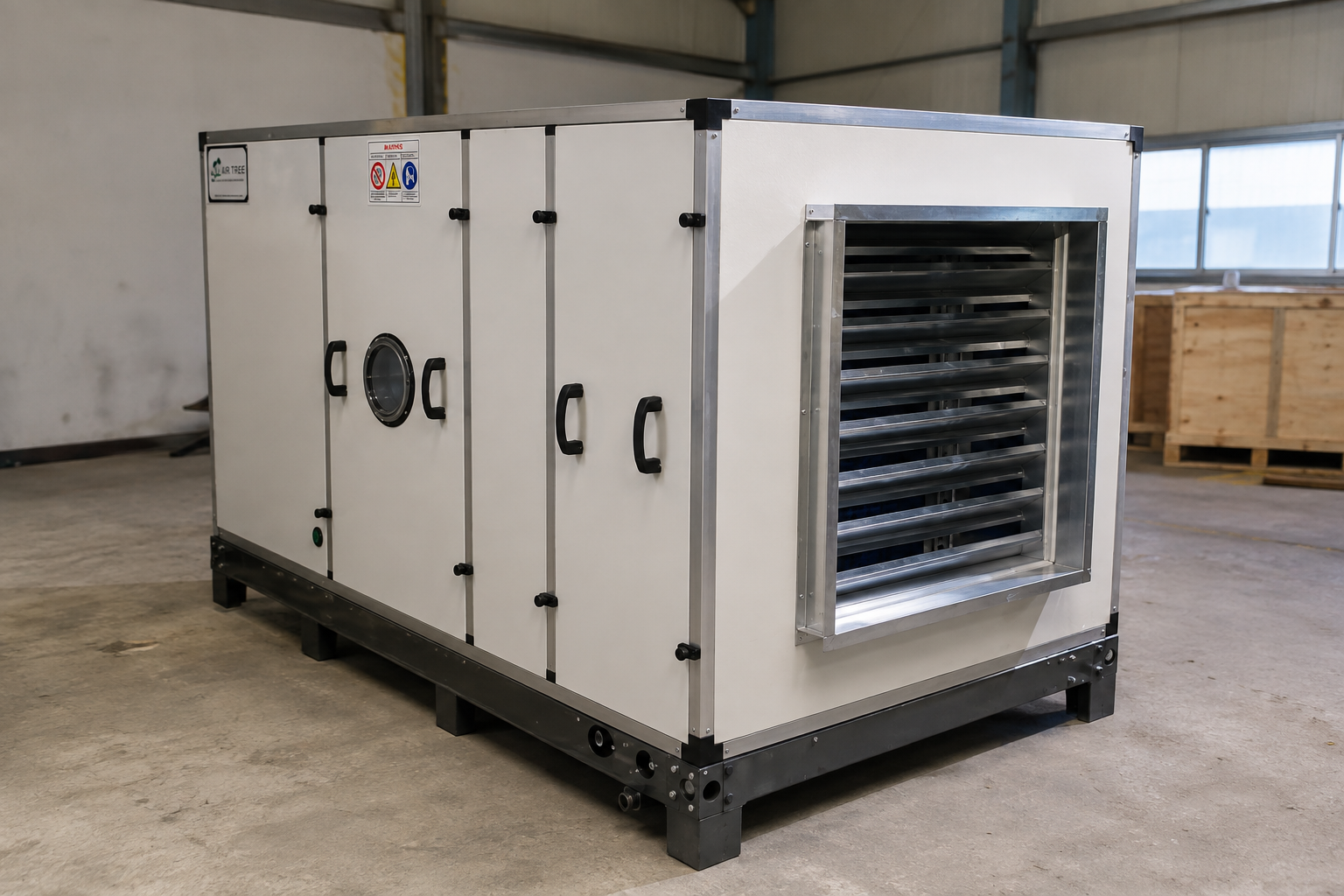
We at Airtree build Wet Scrubbers (Fume Exhaust) for exactly these tough industrial conditions — acidic fumes, corrosive gases, high-temperature streams — where a standard dry filter just wouldn't hold up.
A quick look at what our units offer:
- Capacity: 700 to 40,000 CFM
- Construction: Double skin, built for durability and thermal stability
- Efficiency: 99.9% filtration
- Warranty: 1 year standard
If your plant is dealing with corrosive or high-temperature exhaust and you're not sure which scrubber configuration fits your process, our team can walk you through it. Take a look at our Wet Scrubber (Fume Exhaust) range, or reach out for a quote.
A Few Common Questions
What is a Wet Scrubber?
A Wet scrubber is an air pollution control device that cleans industrial exhaust gases by forcing them to contact a liquid solvent, usually water or a chemical solution. It traps solid dust particles and dissolves harmful gases like sulfur dioxide or hydrogen chloride before the air escapes.
Does a wet scrubber only remove gases, or particles too?
Both, actually. Gases get absorbed or neutralised by the liquid, and fine particles get trapped in liquid droplets and pulled out of the air stream.
What liquid goes into a wet scrubber?
Water is the standard, though it's often dosed with a neutralising chemical depending on what pollutant is being targeted.
Can it handle exhaust that's really hot?
Yes — cooling the exhaust down is actually one of the things a wet scrubber does well as part of the scrubbing process itself.
How much maintenance does one need?
It varies with how hard the system is run and what it's treating, but wet scrubbers generally have a reputation for being low-maintenance and long-lasting when they're operated properly.
Which industries rely on wet scrubbers most?
Chemical and pharma manufacturing, metal finishing, foundries, food processing, and paint or coating lines are among the most common users.
Stay ahead with more industry insights
Join our newsletter to receive the latest HVAC technologies and ventilation solutions directly in your inbox.