What is an AHU Air Handling Unit ?
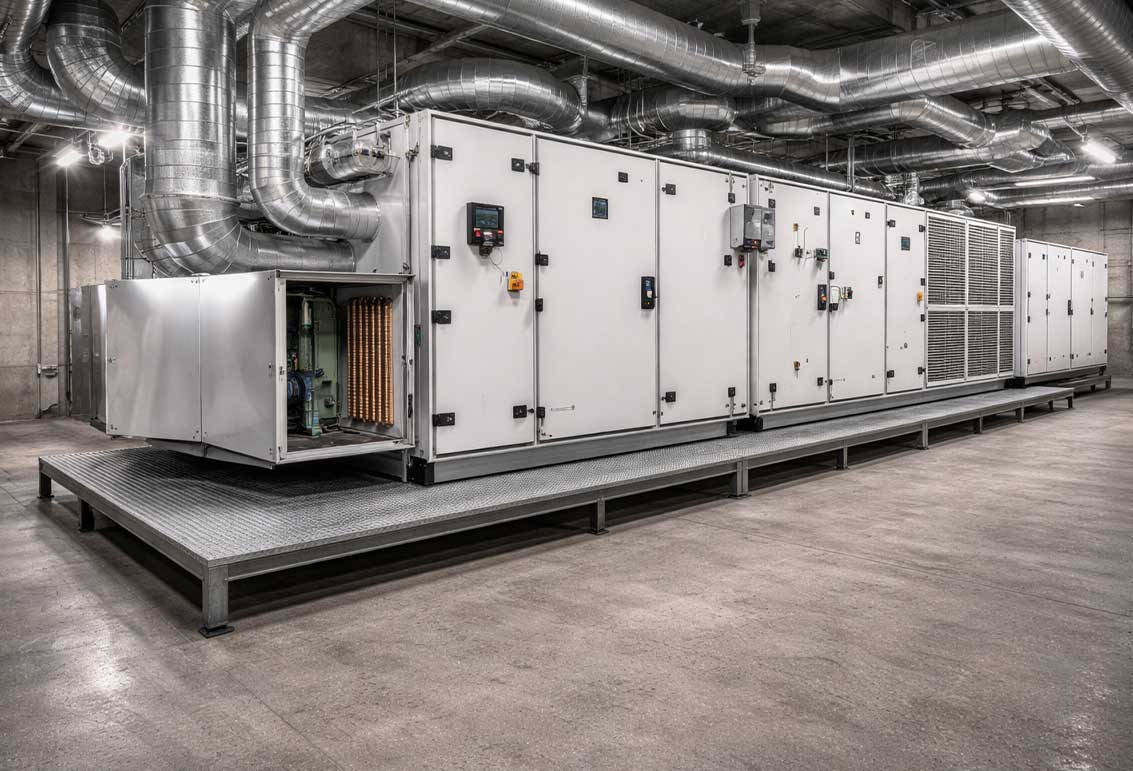
Understanding the AHU Air Handling Unit and Air Handling Unit System
In modern buildings and industrial facilities, maintaining clean, comfortable, and properly circulated air is essential. Whether it is a commercial complex, hospital, factory, or office building, indoor air quality plays a major role in productivity, safety, and overall comfort. One of the most important components responsible for controlling indoor air conditions is the AHU Air Handling Unit, commonly referred to as an Air Handling Unit System.
An (AHU) Air Handling Unit is a key part of an HVAC system that regulates and circulates air as part of heating, ventilation, and air conditioning. It conditions the air by filtering, cooling, heating, and distributing it throughout a building through ductwork.
In this detailed guide, we will explore what an AHU air handling unit is, how it works, its key components, common applications, and why it is an essential part of modern ventilation systems.
What is AHU Air Handling Unit ?
An Air Handling Unit (AHU) is a centralized HVAC component that conditions and circulates air within buildings, acting as the heart of ventilation and temperature control. It draws in outside air, filters, heats, cools, or dehumidifies it, and uses blowers to distribute this clean air throughout a space via ductwork. An AHU Air Handling Unit is essentially a large metal box containing several components such as fans, filters, heating or cooling coils, and dampers.
The main objective of an air handling unit system is to:
- Circulate fresh air
- Remove contaminants
- Control temperature
- Maintain humidity levels
- Ensure proper ventilation
The AHU typically connects to a building’s duct system and distributes conditioned air throughout the structure.
Unlike simple ventilation systems, an AHU air handling unit provides controlled air management, ensuring that indoor spaces receive filtered and temperature-controlled air consistently.
How an Air Handling Unit (AHU) System Works
To understand the importance of an air handling unit system, it is useful to know how it operates step by step.
First, air enters the system through an intake duct. This air can either be fresh outdoor air, return air from the building, or a mixture of both.
Next, the incoming air passes through filters that remove dust, pollen, and other airborne particles.
After filtration, the air moves through heating or cooling coils depending on the required temperature. If the building requires cooling, chilled water or refrigerant cools the air. If heating is required, hot water or electric heaters warm the air.
Once conditioned, the air is pushed by powerful fans into the ductwork system, which distributes the air throughout the building.
Finally, used air returns to the system where it may be filtered and conditioned again before being recirculated.
This continuous cycle ensures a steady supply of fresh and comfortable air.
Key Components & Functions of an AHU Air Handling Unit
An AHU air handling unit consists of several important components. Each part performs a specific role to maintain air quality and airflow efficiency.
1. Air Filters
Air filters are one of the most critical components in an air handling unit system. Their main function is to remove contaminants such as dust, pollen, smoke, and microorganisms from the incoming air.
High-quality filtration improves indoor air quality and protects other components in the system.
2. Blowers or Fans
Fans are responsible for moving air through the AHU and distributing it throughout the building.
They ensure proper airflow and help maintain consistent ventilation across different areas of a facility.
3. Heating and Cooling Coils
Heating and cooling coils regulate the temperature of the air passing through the AHU.
Cooling coils use chilled water or refrigerant to lower air temperature, while heating coils use hot water, steam, or electric heating elements to warm the air.
4. Dampers
Dampers control the volume and direction of airflow inside the system.
They help regulate how much fresh air enters the system and how much return air is recirculated.
5. Humidifiers and Dehumidifiers
Humidity control is an important function in many environments. Some air handling units include humidifiers or dehumidifiers to maintain optimal moisture levels in the air.
6. Mixing Chamber
The mixing chamber combines fresh outdoor air with return air from the building. This helps maintain energy efficiency while ensuring proper ventilation.
7. Control System
Modern AHU air handling units are equipped with control panels and sensors that monitor temperature, humidity, and airflow.
These controls help optimize performance and energy consumption.
Functions of an Air Handling Unit (AHU) System
The air handling unit system performs several essential functions that contribute to indoor comfort and air quality.
- Air Circulation
AHUs ensure consistent airflow throughout a building, preventing stagnant air.
- Temperature Control
The system adjusts the temperature of incoming air to maintain comfortable indoor conditions.
- Air Filtration
By removing pollutants and dust particles, AHUs improve indoor air quality.
Humidity Regulation
In environments where moisture control is necessary, AHUs help maintain proper humidity levels.
- Ventilation
An air handling unit introduces fresh air into the building and removes stale air.
These functions are especially important in commercial buildings where large numbers of people occupy indoor spaces.
Types of Air Handling Units (AHU)
Different buildings require different types of air handling units depending on their size and function.
1. Packaged Air Handling Units
These are compact systems where all components are housed in a single unit.
They are commonly used in medium-sized commercial buildings.
2. Modular Air Handling Units
Modular AHUs are designed with separate sections that can be assembled according to the building’s requirements.
They are highly flexible and suitable for large facilities.
3. Rooftop Air Handling Units
As the name suggests, these units are installed on building rooftops and supply conditioned air through duct systems.
4. Custom Air Handling Units
Some industrial facilities require specially engineered AHU systems designed to handle unique airflow and environmental conditions.
Common Applications of Air Handling Unit Systems
Air handling units are widely used across multiple sectors due to their ability to control indoor air quality and temperature.
- Commercial Buildings
Shopping malls, office complexes, and hotels rely on AHU air handling units to maintain comfortable indoor environments for occupants.
- Hospitals and Healthcare Facilities
Hospitals require strict air quality control to prevent contamination. AHUs help maintain clean and filtered air in operation theaters and patient rooms.
- Industrial Facilities
Manufacturing plants often generate heat, dust, or fumes. Air handling unit systems help remove contaminants and maintain proper ventilation.
- Educational Institutions
Schools and universities use AHUs to maintain proper airflow and temperature in classrooms and lecture halls.
- Data Centers
Server rooms generate significant heat. Air handling units help regulate temperature and ensure proper cooling.
- Pharmaceutical Facilities
Pharmaceutical manufacturing requires strict environmental control. AHU air handling units maintain cleanroom conditions and prevent contamination.
Benefits of Installing an AHU Air Handling Unit
There are several advantages to installing a properly designed air handling unit system.
- Improved Indoor Air Quality
Filtration systems remove harmful particles and allergens from the air.
- Energy Efficiency
Modern AHU systems are designed to optimize airflow while minimizing energy consumption.
- Temperature Consistency
They ensure uniform temperature distribution throughout large spaces.
- Enhanced Comfort
Proper ventilation improves comfort for occupants and workers.
- Compliance with Building Standards
Many building regulations require proper ventilation systems for safety and health reasons.
- Air Handling Unit vs HVAC System
Many people confuse an AHU with the entire HVAC system.
The difference is simple:
| Feature | AHU Air Handling Unit | HVAC System |
| Function | Handles air circulation and conditioning | Full heating, cooling, and ventilation system |
| Scope | Part of HVAC | Complete system |
| Components | Fans, filters, coils | AHU, chillers, ducts, compressors |
In simple terms, the AHU air handling unit is a major component within the HVAC system.
Maintenance Tips for Air Handling Units (AHU)
- Regular maintenance is essential to keep an air handling unit system operating efficiently.
- Important maintenance practices include:
- Cleaning or replacing air filters regularly
- Inspecting fans and motors
- Checking dampers and airflow controls
- Cleaning cooling coils
- Inspecting ducts for leaks
Routine servicing improves system efficiency and extends equipment lifespan.
Future Trends in Air Handling Units
As building technologies evolve, AHU systems are also becoming more advanced.
New developments include:
- Smart sensors for real-time monitoring
- Energy-efficient fan motors
- Advanced filtration technology
- Integration with building management systems
- Eco-friendly cooling solutions
These innovations help reduce energy consumption while improving indoor air quality.
Conclusion
An AHU Air Handling Unit plays a vital role in maintaining comfortable, healthy, and well-ventilated indoor environments. As an essential part of an Air Handling Unit System, it ensures proper air circulation, filtration, temperature control, and humidity management across commercial and industrial buildings.
From offices and hospitals to manufacturing facilities and educational institutions, air handling units are critical for maintaining indoor environmental quality and operational efficiency.
Choosing the right air handling solution ensures long-term performance, energy efficiency, and improved indoor air quality. For organizations looking for reliable HVAC and ventilation solutions, companies like Airtree provide advanced air handling systems designed to meet modern building requirements.
Frequently Asked Questions About Air Handling Units (AHU)
Q1. What is AHU in HVAC?
In an HVAC system, the AHU (Air Handling Unit) is the central component responsible for conditioning and circulating air throughout a building. While the HVAC system as a whole includes chillers, compressors, and ductwork, the AHU specifically handles air filtration, temperature adjustment, and distribution. Think of it as the "lungs" of the HVAC system — it breathes in air, cleans and conditions it, and pushes it out to every room.
Q2. What is an AHU?
An AHU, or Air Handling Unit, is a large metal enclosure that houses fans, filters, heating/cooling coils, and dampers. It is installed as part of a central HVAC system in commercial, industrial, or institutional buildings. Its primary job is to take in air — either fresh outdoor air or return air from rooms — condition it to the desired temperature and humidity, and circulate it back through the building via ductwork.
Q3. What does an Air Handling Unit do?
An Air Handling Unit performs five core functions in any building:
- Filters dust, pollen, and airborne contaminants from incoming air
- Heats or cools the air using coils connected to a chiller or boiler
- Controls humidity using built-in humidifiers or dehumidifiers
- Circulates air throughout the building via a fan and duct system
- Mixes fresh and return air in the mixing chamber for energy-efficient ventilation
Together, these functions ensure clean, comfortable, and healthy indoor air quality at all times.
Q4. How does an Air Handling Unit work?
An AHU works in a continuous cycle. First, air enters through an intake duct — this can be fresh outdoor air, recirculated room air, or a mix of both. The air then passes through filters that remove particulates and contaminants. Next, it flows over heating or cooling coils that bring it to the required temperature. A powerful blower fan then pushes this conditioned air into the duct network, which distributes it across different zones of the building. Finally, stale or used air is drawn back into the system through return air ducts, filtered again, and recirculated — completing the loop.
Q5. What is AHU full form?
AHU stands for Air Handling Unit. It is also sometimes referred to as an Air Handler or Air Handling Plant. In HVAC engineering, the term AHU is universally used to describe the central unit responsible for processing and distributing conditioned air in a building.
Q6. What is an AHU room?
An AHU room (also written as A.H.U. room) is a dedicated mechanical space within a building where the Air Handling Unit is installed. Since AHUs are large pieces of equipment, buildings — especially commercial complexes, hospitals, and factories — reserve a separate room to house them. This room also contains associated components like ductwork connections, drainage trays, control panels, and access panels for maintenance. Proper sizing and ventilation of the AHU room is essential for the unit to operate efficiently and safely.
Q7. What is AHU in a hospital?
In hospitals, AHUs play a critical and life-saving role. Medical environments — especially operation theatres, ICUs, and isolation wards — require extremely strict air quality standards to prevent cross-contamination and infection. Hospital AHUs are equipped with HEPA filters, UV sterilization, and precise humidity and pressure controls to maintain sterile conditions. They are designed to supply 100% fresh air (no recirculation) in critical areas and maintain positive or negative air pressure as required by the room's medical function.
Q8. What is the difference between AHU and HVAC?
This is one of the most common points of confusion. Here is a simple way to understand it:
| AHU | HVAC System | |
|---|---|---|
| What it is | A single component | A complete system |
| Function | Conditions and circulates air | Heating, cooling, ventilation end-to-end |
| Includes | Fans, filters, coils, dampers | AHU + chillers, boilers, compressors, ducts |
| Scope | Air handling only | Full building climate control |
In short, every AHU is part of an HVAC system, but not every HVAC system component is an AHU.
Q9. How does an AHU differ from a split AC?
A split AC is a standalone, room-level cooling device that cools a single space using a refrigerant cycle. An AHU, on the other hand, is a centralized system designed to condition and distribute air across multiple zones or an entire building. AHUs offer far greater control over air quality, humidity, and ventilation — making them the preferred choice for hospitals, factories, offices, and large commercial buildings where split ACs would be impractical.
Q10. What is the maintenance schedule for an Air Handling Unit?
Regular maintenance is critical to keep an AHU running efficiently and to extend its operational life. A standard maintenance schedule includes:
- Monthly: Inspect and clean or replace air filters; check fan belts and bearings
- Quarterly: Clean cooling and heating coils; check dampers and actuators; inspect drain trays for blockages
- Half-yearly: Inspect ductwork for leaks; lubricate motors; check electrical connections and control sensors
- Annually: Full system inspection including airflow balancing, coil deep-cleaning, and performance testing
Neglecting AHU maintenance leads to reduced air quality, higher energy consumption, and costly breakdowns.
Stay ahead with more industry insights
Join our newsletter to receive the latest HVAC technologies and ventilation solutions directly in your inbox.