Signs of AHU Filter Clogging and How to Fix It
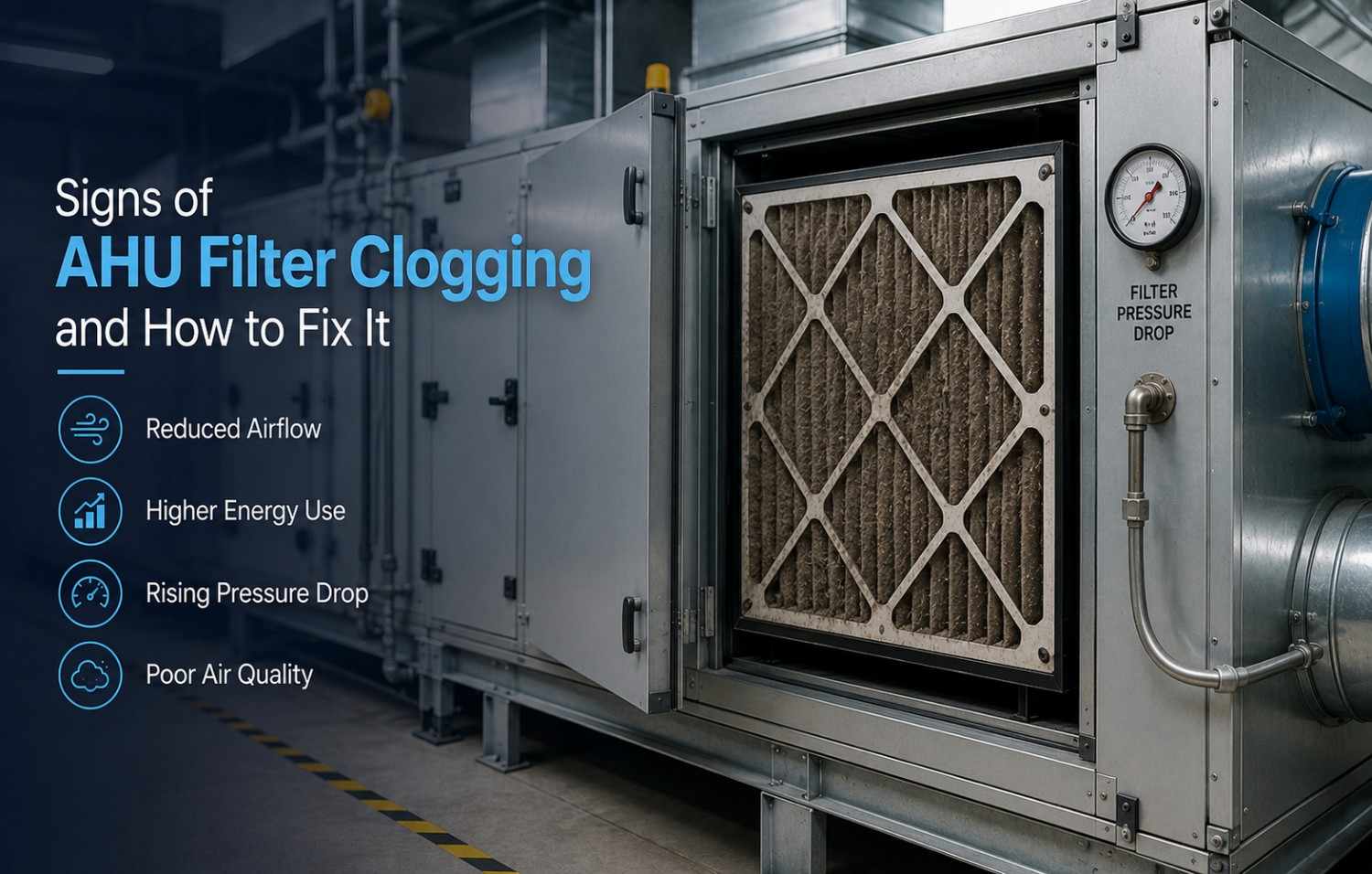
An Air Handling Unit (AHU) is the heart of any HVAC system, responsible for circulating, filtering, and conditioning air across commercial, industrial, and institutional spaces. At the core of every AHU's performance is one small but critical component: the filter. When filters become dirty or blocked, the entire system suffers — airflow drops, energy consumption rises, and indoor air quality deteriorates.
AHU filter clogging is one of the most common yet most overlooked HVAC problems. Left unaddressed, it can lead to reduced comfort, higher operating costs, and even permanent damage to expensive equipment. Understanding the early warning signs — and knowing how to fix them — can save facility managers significant time, money, and unplanned downtime.
This guide walks through the causes, signs, and solutions for AHU filter clogging, along with a practical checklist to keep your Air Handling Unit running at peak efficiency.
Why AHU Filters Get Clogged
Filters in an Air Handling Unit are designed to trap dust, pollen, dirt, microorganisms, and other airborne particles before conditioned air is distributed through the building. Over time, this trapped debris accumulates on the filter media, restricting the free flow of air.
Common causes of AHU filter clogging include:
- High dust or particulate load in the surrounding environment, especially in industrial areas or construction zones
- Infrequent filter replacement or cleaning schedules
- Poor pre-filtration, allowing coarse particles to reach finer filter stages
- Humidity and moisture, which can cause filter media to become damp and trap particles more aggressively
- Extended operating hours without corresponding maintenance intervals
- Low-quality or incorrectly rated filters that clog faster than designed
Every AHU, whether serving a hospital, mall, hotel kitchen, or manufacturing facility, is exposed to a different combination of these factors. This is why a fixed maintenance calendar is not always enough — filter conditions should be actively monitored.
Signs of AHU Filter Clogging
Recognizing the symptoms early is the key to preventing costly breakdowns. Here are the most common signs that your AHU filter is clogged and needs attention.
1. Reduced Airflow
One of the earliest and most noticeable signs of a clogged AHU filter is weak or inconsistent airflow from supply diffusers and grilles. As dust and debris build up on the filter media, air struggles to pass through, reducing the volume of conditioned air delivered to occupied spaces.
2. Rising Energy Bills
A clogged filter forces the AHU's fan motor to work harder to push air through the restricted media. This increased strain translates directly into higher electricity consumption. If energy bills are climbing without a clear explanation, filter conditions should be one of the first things inspected.
3. Uneven Temperature Control
When airflow is restricted, some zones of a building may cool or heat unevenly. Rooms farther from the AHU may feel warmer or stuffier than those closer to the unit, indicating that the system isn't distributing air as designed.
4. Increased Static Pressure Readings
Facility teams that monitor static pressure across the filter bank will notice a steady rise in pressure drop as the filter clogs. Most manufacturers specify a maximum allowable pressure drop — once readings exceed this threshold, the filter requires immediate replacement or cleaning.
5. Unusual Noise from the Fan Motor
As the AHU's fan compensates for restricted airflow, it may run at higher speeds or produce a strained, humming, or whining noise. This is a sign the motor is working beyond its normal load, which can shorten its lifespan.
6. Musty Odors or Poor Indoor Air Quality
A clogged filter loaded with trapped dust, moisture, and organic material can become a breeding ground for mold and bacteria. This often results in musty smells circulating through the ductwork, along with a general decline in indoor air quality — a particularly serious concern in hospitals, laboratories, and commercial kitchens.
7. Frequent System Cycling or Overheating
Restricted airflow can cause the AHU to overheat or trip safety cutoffs more frequently. If the system is cycling on and off more than usual, or shutting down unexpectedly, filter clogging should be investigated as a likely cause.
8. Visible Dust Buildup
A simple visual inspection often confirms what other signs suggest. A filter that appears grey, matted, or coated in a visible layer of dust and debris has likely exceeded its effective service life.
9. Increased Dust Settling Indoors
If dust appears to be settling faster than usual on furniture, floors, or equipment near air outlets, it may indicate that the filter is no longer capturing particulates effectively — either due to clogging or physical damage to the filter media allowing bypass.
How to Fix AHU Filter Clogging
Once clogging is identified, timely action prevents further strain on the system and protects indoor air quality. Here's how facility teams can address the issue.
Step 1: Inspect the Filter Bank
Begin with a visual and physical inspection of all filter stages — pre-filters, fine filters, and any HEPA stages if present. Look for discoloration, matting, tears, or gaps around the filter frame that could allow unfiltered air to bypass the media.
Step 2: Measure Static Pressure
Use a manometer to check the pressure drop across the filter. Compare readings against the manufacturer's recommended threshold. A significant increase over baseline readings confirms clogging even before visual signs become obvious.
Step 3: Clean or Replace the Filter
Depending on the filter type:
- Washable filters can often be cleaned with water and mild detergent, then thoroughly dried before reinstallation.
- Disposable filters (most pleated and bag filters) should be replaced entirely — attempting to clean them can damage the media and reduce filtration efficiency.
- HEPA and fine filters typically require full replacement, as their dense media is not designed for repeated cleaning.
Step 4: Check for Air Leaks Around the Filter Frame
A poorly seated filter can allow air to bypass filtration entirely, reducing effectiveness even with a clean filter installed. Ensure gaskets and frames are properly sealed after every replacement.
Step 5: Clean Surrounding Components
Dust from a clogged filter often spreads to cooling coils, dampers, and ductwork nearby. A thorough cleaning of these components alongside filter replacement restores overall system efficiency.
Step 6: Verify Fan and Motor Performance
After addressing the filter, monitor the fan motor's current draw and noise levels to confirm it has returned to normal operating parameters. Persistent strain after filter replacement may indicate additional mechanical issues.
Step 7: Reset and Monitor
After servicing, log the new baseline static pressure reading and reset any maintenance tracking systems. This baseline becomes the reference point for detecting the next clogging cycle early.
AHU Filter Clog Checklist
Use this quick-reference checklist to build a consistent filter maintenance routine:
- Inspect filters visually every 2–4 weeks
- Measure and log static pressure drop monthly
- Replace disposable filters every 1–3 months, or sooner in high-dust environments
- Clean washable filters per manufacturer guidelines
- Check filter frame seals and gaskets during every inspection
- Monitor fan motor current draw and noise levels
- Inspect cooling coils and ductwork for dust migration
- Track indoor air quality complaints or odor reports
- Maintain a maintenance log with dates, readings, and actions taken
- Schedule professional AHU servicing at least twice a year
Following this checklist consistently helps facility teams catch clogging early, before it affects comfort, air quality, or energy costs.
Preventing Future Filter Clogging
Beyond routine cleaning and replacement, a few proactive measures can extend the life of AHU filters and reduce the frequency of clogging:
- Install adequate pre-filtration to capture larger particles before they reach finer filter stages
- Match filter ratings to the environment, especially in industrial or high-pollution areas
- Control humidity levels around the AHU to prevent filter media from becoming damp
- Train maintenance staff to recognize early warning signs rather than waiting for scheduled replacements
- Use building automation or monitoring systems to track static pressure trends automatically
A proactive approach to filter maintenance not only prevents the signs discussed above but also protects the broader HVAC system from unnecessary wear.
Conclusion
A Clogged AHU filter may seem like a minor issue, but its effects ripple across the entire HVAC system — from rising energy bills and uneven temperatures to poor indoor air quality and premature equipment wear. Recognizing the signs early, from reduced airflow to unusual motor noise, allows facility teams to act before small problems become expensive repairs.
Regular inspection, timely cleaning or replacement, and a disciplined maintenance checklist are the most effective ways to keep an Air Handling Unit performing efficiently year-round.
For businesses looking for reliable, high-performance Air Handling Units and expert maintenance guidance, Airtree HVAC designs and manufactures AHUs built for durability and consistent airflow across industries — from hospitals and hotels to malls and manufacturing facilities. With in-house manufacturing and a service-first approach, AirTree helps organizations maintain clean, efficient, and reliable air systems for the long term.
Stay ahead with more industry insights
Join our newsletter to receive the latest HVAC technologies and ventilation solutions directly in your inbox.