Fresh Air Handling Units (FAHU): Components, Operation & Maintenance
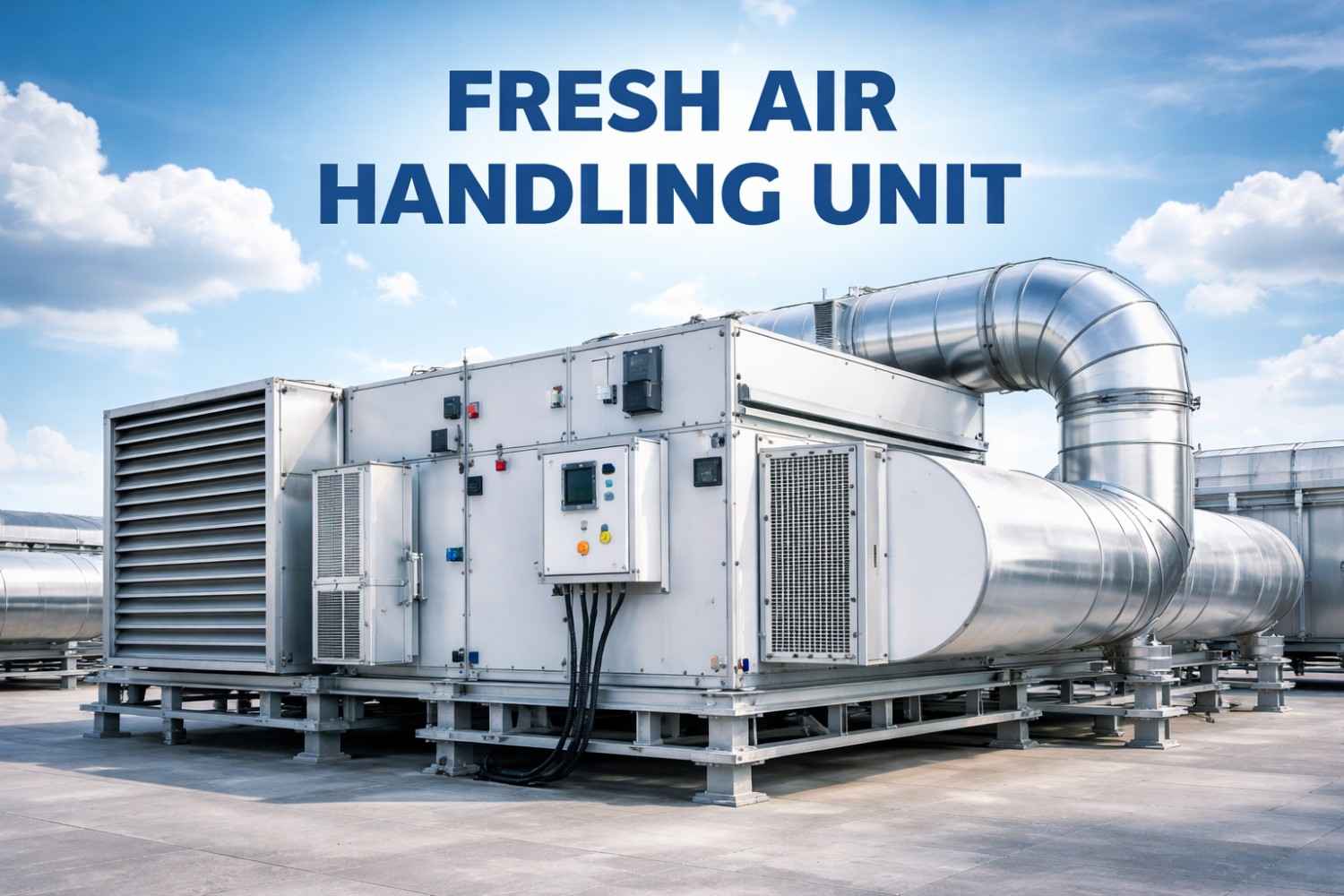
Indoor air quality has become a major concern in modern buildings, especially with increasing pollution levels and tightly sealed structures. To address this, HVAC systems now rely on specialized equipment like Fresh Air Handling Units (FAHUs). These systems are designed not just for temperature control but for ensuring a steady supply of clean and fresh air indoors. The Full Form Of Fahu is Fresh Air Handling Unit.
Whether it is a commercial building, hospital, or industrial facility, FAHUs play a vital role in maintaining a healthy indoor environment. This blog explains FAHUs in detail, covering their construction, components, working, and maintenance in a simple and practical way.
What is a Fresh Air Handling Unit (FAHU)?
A Fresh Air Handling Unit (FAHU) is a type of HVAC system that is specifically designed to treat and supply fresh outdoor air into indoor spaces. Unlike conventional air handling units that mainly recirculate indoor air, a FAHU works with 100% fresh air intake.
The primary function of a FAHU is to improve indoor air quality by filtering, conditioning, and distributing clean air throughout a building. It removes dust, pollutants, and harmful particles while also controlling temperature and humidity levels.
FAHUs are especially important in places where air quality is critical, such as hospitals, laboratories, cleanrooms, and manufacturing units. By continuously replacing stale indoor air with fresh air, these systems help create a healthier and more comfortable environment.
Key Construction and Design Features of Fresh Air Handling Units
The design of a FAHU is carefully engineered to ensure efficient performance and durability. One of the most important aspects is the unit casing, which is usually made of high-quality materials like galvanized steel or aluminum. This casing protects internal components and prevents air leakage.
Another key feature is thermal insulation. FAHUs are insulated to avoid energy loss and prevent condensation, which can affect system performance. Proper sealing is also essential to ensure that no untreated air enters the system. The airflow design within the unit is optimized for smooth and uniform distribution. Advanced FAHUs are equipped with energy-efficient fans and motors that reduce power consumption while maintaining consistent airflow.
In addition, modern FAHUs often include smart control systems that allow monitoring and adjustment of temperature, humidity, and airflow. These features make the system more efficient and easier to manage.
Main Components of FAHUs
A FAHU consists of several essential components that work together to process and deliver fresh air. The filtration system is one of the most critical parts, as it removes dust, dirt, and other airborne contaminants. Depending on the application, multiple stages of filters may be used, including pre-filters and fine filters.
The cooling and heating coils are responsible for adjusting the air temperature. These coils ensure that the incoming air is conditioned according to indoor comfort requirements, regardless of external weather conditions.
Fans or blowers play a key role in moving air through the system and distributing it across different areas. Without proper airflow, the system cannot function effectively. Dampers are used to control the amount of fresh air entering the system. They help regulate airflow and maintain balance between intake and exhaust.
In some setups, humidity control devices such as humidifiers or dehumidifiers are also included. These components help maintain optimal moisture levels, which is important for both comfort and equipment protection.
Operating Principles of Fresh Air Handling Units
The operation of a FAHU follows a systematic process that ensures the delivery of clean and conditioned air. It begins with the intake of fresh air from outside the building. This air enters the system through dampers that control the volume of intake.
Once inside, the air passes through a series of filters that remove dust, pollen, and other contaminants. This step is crucial for maintaining air quality and protecting internal components. After filtration, the air is conditioned using heating or cooling coils. During hot weather, the air is cooled to a comfortable level, while in colder conditions, it is heated accordingly. This ensures that the indoor environment remains consistent regardless of outdoor temperature.
Humidity control is another important aspect of the operation. If required, the system adjusts moisture levels to prevent dryness or excessive humidity.
The treated air is then distributed throughout the building using ducts and fans. At the same time, stale air is often removed through an exhaust system, maintaining proper ventilation balance.
This continuous cycle ensures that indoor spaces receive a constant supply of fresh, clean, and comfortable air.
Maintenance Practices for Fresh Air Handling Units
Regular maintenance is essential to keep FAHUs operating efficiently and to extend their lifespan. With a solution from Airtree, maintenance becomes more structured and performance focused. One of the most important tasks is maintaining the filters. Over time, filters can become clogged with dust and particles, reducing airflow and system efficiency. Cleaning or replacing them at regular intervals is necessary.
The coils should also be inspected and cleaned to ensure proper heat exchange. Dirty coils can affect temperature control and increase energy consumption. Fans and blowers must be checked for smooth operation. Any unusual noise or vibration should be addressed immediately to prevent further damage.
Dampers need to be inspected to ensure they are functioning correctly and allowing proper airflow. Faulty dampers can disrupt the balance of the system. Ducts should be cleaned periodically to prevent dust accumulation, which can affect air quality and airflow. Additionally, humidity control components must be checked to ensure they are maintaining the correct moisture levels.
Scheduling regular professional servicing is highly recommended, as it helps identify potential issues early and ensures the system runs efficiently. Airtree also supports long-term system reliability with well-designed FAHU solutions and service support.
Frequently Asked Questions (FAQ)
1. What is the main purpose of a FAHU?
The main purpose of a FAHU is to supply fresh, filtered, and conditioned air into indoor spaces, improving air quality and ventilation.
2. How is FAHU different from AHU?
A FAHU uses 100% fresh outdoor air, while an AHU mainly recirculates indoor air for temperature control.
3. Where are FAHUs commonly used?
They are widely used in hospitals, cleanrooms, industries, commercial buildings, and laboratories.
4. How often should FAHU filters be replaced?
Filter replacement depends on usage and environment, but generally, they should be checked monthly and replaced as needed.
5. Is FAHU energy-efficient?
Yes, modern FAHUs are designed with energy-efficient components that optimize performance while reducing power consumption.
6. Why is FAHU important in modern buildings?
FAHU ensures proper ventilation and improves indoor air quality, which is essential in today’s airtight and pollution-prone environments.
7. What is full form Of FAHU?
The Full Form Of Fahu is Fresh Air Handling Unit.
Conclusion
Fresh Air Handling Units (FAHUs) have become an essential part of modern HVAC systems, especially where indoor air quality is a top priority. By continuously supplying fresh, filtered, and conditioned air, these systems create a healthier and more comfortable indoor environment. With advanced solutions from Airtree, achieving consistent air quality and system efficiency becomes more reliable.
Understanding the components, design, and operation of FAHUs helps in selecting the right system and ensuring its efficient performance. With proper maintenance practices, FAHUs can deliver long-term reliability and consistent air quality, especially when supported by trusted solutions like Airtree.
As buildings continue to evolve with advanced designs and tighter structures, the role of FAHUs will only become more important. Investing in a well-designed FAHU system is not just about comfort, it is about creating a safer and more sustainable indoor space with dependable systems from Airtree.
Stay ahead with more industry insights
Join our newsletter to receive the latest HVAC technologies and ventilation solutions directly in your inbox.